
plastic waste in the global market
author: YONGJIANG GROUP
2024-06-24
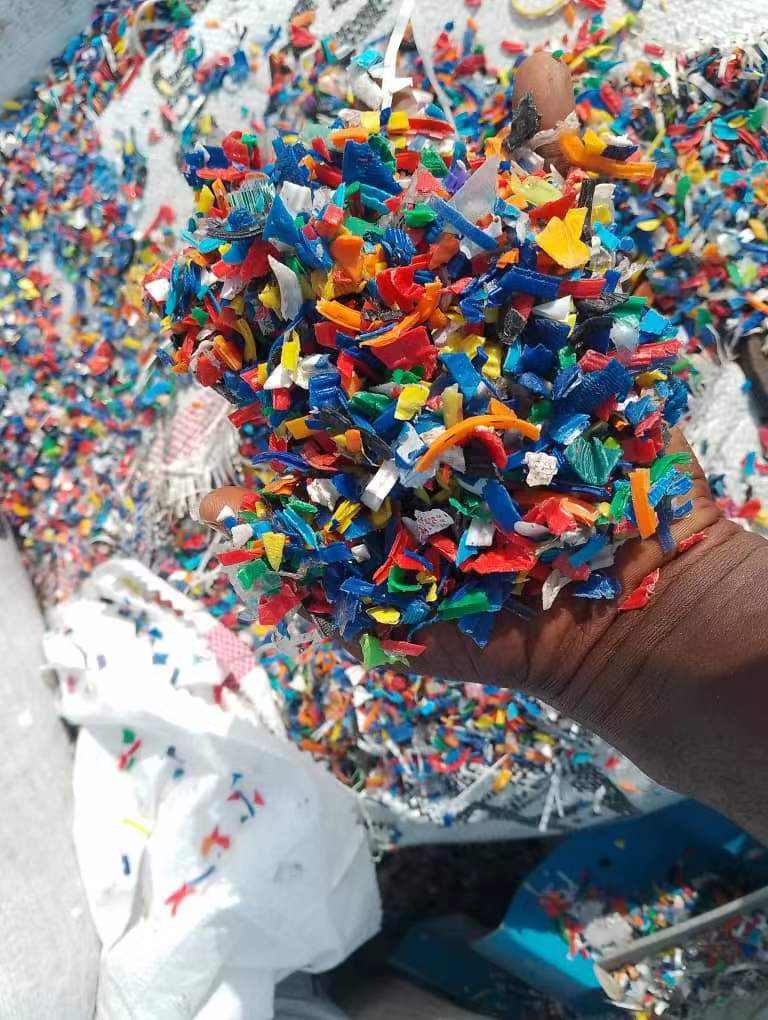
Overview of global plastic waste trading
Every year, approximately 350 million tons of plastic waste are generated globally, equivalent to more than 10 million fully loaded garbage trucks. Most plastic waste is either incinerated or sent to landfills. Only a small portion of this waste is recycled, and only 2% is traded internationally.
According to data from the OECD and the UN Comtrade database, a chart created by "Our World in Data" reveals the amount of cross-border trade in plastic waste and evaluates which countries export and import the most plastic waste.
While most plastic scrap is managed and recycled within individual countries, exports help to manage some plastic waste emissions at a cheaper cost and alleviate pressure on local recycling facilities and landfills. Importing plastic scrap can also bring economic benefits, as it is a much cheaper option for industries that rely on buying new materials. Many countries have differences in specific plastic recycling capacity and demand, so while they may export some plastic scrap, they also import other useful plastic waste scrap.
Research has found that the increase in plastic waste cans imports has had a positive impact on the economic growth of many low-income countries. However, when countries export contaminated and non-recyclable plastic waste cans, these low-income countries may notice ecological costs that outweigh any economic benefits.
It is reported that European plastic waste exports are close to 4 million tonnes, accounting for nearly 80% of global plastic waste trade. However, as most of these exports go to other European countries, it is also the largest import region.
According to the UN Comtrade database, here are the major plastic waste cans exporting countries in 2020:
Germany is the world's largest plastic waste cans exporter, with an export volume of 854 million kilograms, mainly relying on the Netherlands, Poland, Austria, Switzerland, Turkey, and Malaysia to handle this waste.
The largest plastic waste scrap exporter in Asia is Japan, which trades mainly with other Asian countries such as Malaysia, Vietnam, Thailand, and South Korea. In 2020, Japan was the world's second-largest plastic waste exporter, with an export volume of 821 million kilograms.
The third-ranking country is the United States. It is estimated that the country exported over 600 million kilograms of plastic waste in 2020, most of which were traded with Canada, but also with Mexico, Malaysia, Vietnam, India, Hong Kong, and Indonesia.
On the receiving end, Malaysia and Turkey have become the world's largest plastic waste cans importing countries.
Plastic waste trade is changing. Prior to 2017, China was one of the largest plastic waste scrap importing countries in the world. In 2018, China launched the "National Sword" program, which resulted in a drop of over 95% in its plastic waste cans imports within a year.
In 2019, 187 countries signed an international treaty called the Basel Convention on the Control of Transboundary Movements of Hazardous Waste and their Disposal. The treaty aims to address the gap in plastic waste scrap management and limit participating countries from engaging in international plastic waste cans trade unless there is insufficient recycling or processing capacity.
Over the past decade, global plastic waste cans trade has indeed declined significantly. However, millions of tons of plastic waste are still being transported (and poorly managed).
Recently, the European Parliament passed a ban on the export of plastic waste to non-OECD countries. EU countries will have to stop shipping plastic waste scrap to poorer countries within two and a half years after the legislation takes effect, and stricter conditions will also be imposed on plastic waste exported to OECD countries. This ban will also have a significant impact on global plastic waste trade.
According to data from the OECD and the UN Comtrade database, a chart created by "Our World in Data" reveals the amount of cross-border trade in plastic waste and evaluates which countries export and import the most plastic waste.
While most plastic scrap is managed and recycled within individual countries, exports help to manage some plastic waste emissions at a cheaper cost and alleviate pressure on local recycling facilities and landfills. Importing plastic scrap can also bring economic benefits, as it is a much cheaper option for industries that rely on buying new materials. Many countries have differences in specific plastic recycling capacity and demand, so while they may export some plastic scrap, they also import other useful plastic waste scrap.
Research has found that the increase in plastic waste cans imports has had a positive impact on the economic growth of many low-income countries. However, when countries export contaminated and non-recyclable plastic waste cans, these low-income countries may notice ecological costs that outweigh any economic benefits.
It is reported that European plastic waste exports are close to 4 million tonnes, accounting for nearly 80% of global plastic waste trade. However, as most of these exports go to other European countries, it is also the largest import region.
According to the UN Comtrade database, here are the major plastic waste cans exporting countries in 2020:
Germany is the world's largest plastic waste cans exporter, with an export volume of 854 million kilograms, mainly relying on the Netherlands, Poland, Austria, Switzerland, Turkey, and Malaysia to handle this waste.
The largest plastic waste scrap exporter in Asia is Japan, which trades mainly with other Asian countries such as Malaysia, Vietnam, Thailand, and South Korea. In 2020, Japan was the world's second-largest plastic waste exporter, with an export volume of 821 million kilograms.
The third-ranking country is the United States. It is estimated that the country exported over 600 million kilograms of plastic waste in 2020, most of which were traded with Canada, but also with Mexico, Malaysia, Vietnam, India, Hong Kong, and Indonesia.
On the receiving end, Malaysia and Turkey have become the world's largest plastic waste cans importing countries.
Plastic waste trade is changing. Prior to 2017, China was one of the largest plastic waste scrap importing countries in the world. In 2018, China launched the "National Sword" program, which resulted in a drop of over 95% in its plastic waste cans imports within a year.
In 2019, 187 countries signed an international treaty called the Basel Convention on the Control of Transboundary Movements of Hazardous Waste and their Disposal. The treaty aims to address the gap in plastic waste scrap management and limit participating countries from engaging in international plastic waste cans trade unless there is insufficient recycling or processing capacity.
Over the past decade, global plastic waste cans trade has indeed declined significantly. However, millions of tons of plastic waste are still being transported (and poorly managed).
Recently, the European Parliament passed a ban on the export of plastic waste to non-OECD countries. EU countries will have to stop shipping plastic waste scrap to poorer countries within two and a half years after the legislation takes effect, and stricter conditions will also be imposed on plastic waste exported to OECD countries. This ban will also have a significant impact on global plastic waste trade.
Thailand: Achieve complete plastic waste recycling by 2027
injection molding machine industry keep growing in 2024
Related Article
The Ministry of Natural Resources and Environment of Thailand recently expressed optimism towards the goal of achieving 100% plastic waste recycling by 2027. To encourage plastic waste recycling, the ministry is partnering with the private sector to accelerate the production of recyclable plastic products to replace single-use plastic bags.
Thailand: Achieve complete plastic waste recycling by 2027

Injection molding machines are one of the commonly used plastic molding methods in injection molding machine industry, and this product has now been widely used in various industries such as general plastics, automotive industry, and household appliances.
injection molding machine industry keep growing in 2024

Polycarbonate (PC) is a general term for a class of high molecular weight polymers containing carbonate structures in their molecular chains. Classified by the functional groups on the molecular chain, they can be divided into aliphatic, aromatic or aliphatic-aromatic PC.
Application scheme of modified polycarbonate (PC) materials in automobiles